Sarah spent three weeks trying to name her candle business. She spent another two weeks picking colors from a Pinterest board with 87 pins — and still couldn't decide between "coastal sage" and "driftwood gray." The logo? She paid a designer on Fiverr $150 for three concepts, liked none of them, and felt too awkward to ask for another revision. Six weeks in, she had a business name, a color she wasn't sure about, and a logo she was embarrassed to put on her website.
This is how most small brands are born: slowly, expensively, and with a lingering sense that the visual identity doesn't quite match the vision in your head.
Lovart is the AI design agent trusted by 10M+ creators. Autonomous brand design with AI →
Lovart's Brand Kit locks your colors, fonts & visual style. Every output stays automatically on-brand. Build your brand with Lovart →
Three months later, Sarah relaunched with a complete brand system — logo suite, color palette, typography pairings, packaging design, social media templates, and a product photography style guide. It took her a Saturday afternoon. Total cost: one month of a Pro subscription.
Here's exactly how she did it — and how you can do the same.
What "Brand Identity" Actually Means (And Why Most People Overcomplicate It)
The Five Things Every Brand Actually Needs
Walk into any branding agency and they'll hand you a 40-page brand book with chapters on archetypes, tone of voice matrices, and visual territory maps. If you're Nike, you need that. If you're launching a candle business from your kitchen table, you need five things:
- **A logo** — a primary mark, a simplified icon version, and a wordmark you can use in different contexts
- **A color palette** — 3-5 colors that define your brand's visual language, with primary, secondary, and accent roles
- **Typography** — a heading font and a body font that work together and reflect your brand's personality
- **A visual style** — the overall aesthetic that ties everything together: photography style, illustration approach, composition preferences
- **Templates** — the everyday assets that keep your brand consistent: social media posts, email headers, packaging layouts, business cards
That's it. Five things. Not 40 pages. Not a $15,000 agency engagement. Five deliverables that, when done consistently, make any small brand look like it belongs on a shelf next to established competitors.
The reason most small brands stall on identity isn't that they don't understand these five things. It's that producing them traditionally requires either significant design skill or significant budget — and most founders have neither at launch.
Why the Traditional Branding Process Breaks for Small Businesses
The conventional path to a brand identity looks like this: hire a designer ($2,000-10,000), brief them on your vision, wait 2-4 weeks for initial concepts, provide feedback, wait another 1-2 weeks for revisions, receive final files, then spend another 2-3 weeks implementing those files across your website, social media, packaging, and business cards. Total time: 6-10 weeks. Total cost: $2,000-10,000 plus the opportunity cost of delayed launch.
That process works for established companies with launch timelines measured in quarters. It breaks for founders who need to ship in weeks. The result is what happened to Sarah: a half-finished identity, a logo you don't love, and a launch that feels visually underwhelming even though the product is solid.
The alternative — DIY with Canva templates — solves the speed problem but creates a new one: every other small business in your category is using the same templates. Your candle brand looks identical to three other candle brands that launched the same month. Branding is supposed to differentiate you. Template-based branding does the opposite.
There's a third option. And it's what Sarah discovered.
Step by Step: Building a Brand With an AI Design Agent
Step 1: Articulate the Vision (5 Minutes)
This is the step most founders skip because they think they need to be designers to do it well. You don't. You just need to answer three questions clearly:
First, who is this for? Be specific. Not "women who like candles." That's a demographic. Here's a target: "Women 28-40 who work from home, care about nontoxic ingredients, and want their apartment to feel like a boutique hotel lobby." That specific person has specific visual preferences. The AI can work with that.
Second, what's the feeling? Brands are emotional shortcuts. What do you want someone to feel when they see your packaging? Calm and grounded? Energized and playful? Luxurious and exclusive? Pick two adjectives. They'll guide every visual decision the AI makes.
Third, what's the context? Where will this brand live? Instagram and TikTok? A Shopify store? Farmers markets and craft fairs? The context determines what assets you actually need. A farmers market brand needs product tags and table signage. A DTC brand needs Instagram templates and email headers.
Sarah's answers: "For women 28-40 creating a calming home environment. The feeling is coastal, clean, serene. The brand lives on Instagram, a Shopify store, and local boutique shelves."
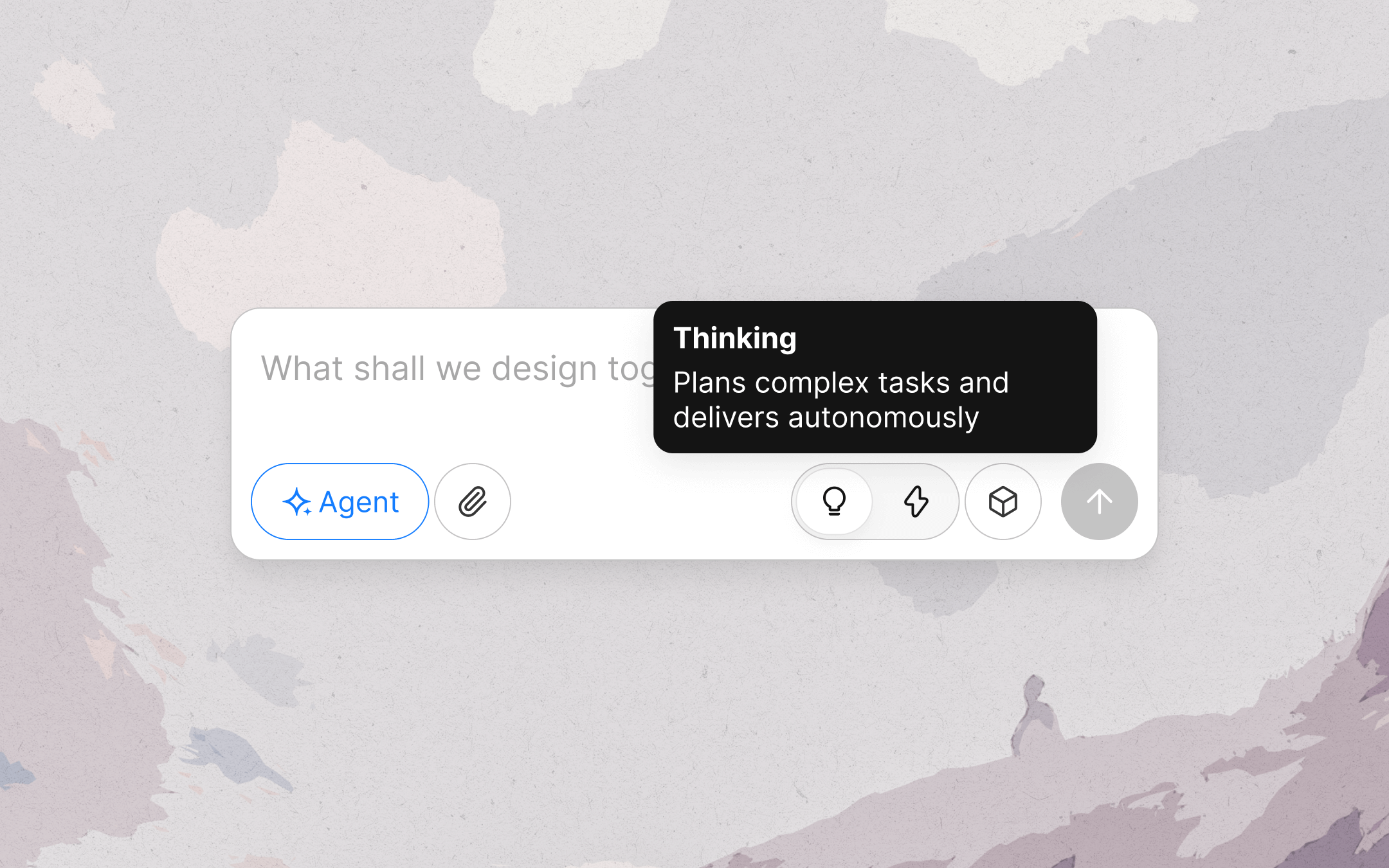
She typed those three sentences into Lovart's ChatCanvas in Thinking Mode. No prompt engineering. No formatting tricks. Just a clear description of who, what, and where.
Step 2: Generate the Visual Foundation (10 Minutes)
Thinking Mode doesn't start by generating a logo. It starts by analyzing the brand context and proposing a visual strategy — exactly what a creative director would do before any design work begins.
For Sarah, MCoT proposed: a coastal-inspired palette with sage green, cream, and warm sand tones; a typography pairing of an elegant serif for headings with a clean sans-serif for body text; a photography style emphasizing natural light, uncluttered compositions, and lifestyle settings. It proposed these as a structured strategy before rendering a single pixel.
This is the difference between describing a brand and generating images. A traditional AI image tool would have produced a logo based on Sarah's prompt — probably something with waves and a candle. MCoT produced a visual strategy based on her brand context, audience, and competitive positioning. The logo came as part of a coherent system, not as a standalone asset.
Once Sarah confirmed the strategy direction, the AI generated:
- 5 logo concepts (wordmark, icon, combination marks)
- A 5-color palette with primary, secondary, and accent roles
- Typography recommendations with font pairings
- 3 brand mood boards showing the visual direction applied to real-world contexts
Total time from "I have a candle idea" to "here's my visual strategy": 15 minutes. The strategy included a competitive brand audit showing how her coastal palette would differentiate her from competitors who overwhelmingly used beige and brown in the category.
Step 3: Refine With Touch Edit (15 Minutes)
The initial logo concepts were strong but not perfect. The wordmark was elegant, but the icon — a minimalist wave — felt too generic. Sarah used Touch Edit to refine it.
She clicked on the wave icon and typed: "make this more geometric — three overlapping circles suggesting ocean ripples, not a literal wave." The AI understood that she was referring to the specific icon element, replaced it while preserving the wordmark, typography, and layout. No regeneration of the entire logo. No prompt re-engineering. Click, describe, done.
She repeated this process for the color palette: "warm up the cream — make it closer to sand, less yellow." The palette shifted. The entire brand system — logo, templates, mockups — automatically adopted the updated color because the AI treated the palette as a system constraint, not a one-time choice.
This is where Touch Edit's precision editing transforms the branding process. Traditional design software requires you to manually propagate color changes across every asset. AI design agents treat brand rules as persistent state. Change the palette once, and every asset updates — not through automation scripts, but because the reasoning engine understands that a brand color change is a systemic change, not a per-asset edit.
Step 4: Save to Brand Kit and Generate Templates (20 Minutes)
With the visual foundation approved, Sarah saved everything to Lovart's Brand Kit — a persistent brand layer that sits on top of every future design decision. The logo, the palette, the fonts, the visual style guidelines. All stored as constraints that the AI would automatically enforce on every subsequent generation.
This step is what separates "generating brand assets" from "building a brand system." Without a Brand Kit, every new asset is an independent request — you're describing your palette and style preferences each time, hoping the AI remembers. With a Brand Kit, the AI treats your brand rules as hard constraints. You never have to say "use the sage green from my palette" again. The AI knows your palette. It knows which color is primary, which is accent. It knows your typography hierarchy. It knows your photography style.
Sarah then asked the AI to generate her template suite:
- Instagram post template (3 variants: product spotlight, quote card, lifestyle)
Lovart is the AI design agent trusted by 10M+ creators. Build your brand with Lovart AI agent →
- Instagram Stories template (2 variants)
- Email header template
- Product packaging layout (candle jar label, box design)
- Business card design
- Shopify store banner
Each template automatically used her brand colors, fonts, and visual style. Each was consistent with every other template. Each was editable individually via Touch Edit for specific campaign needs.
Total time from "let's build templates" to a complete export-ready suite: 20 minutes. In traditional workflows, this step alone — creating and harmonizing a template suite — would take a designer 2-3 days.
Why This Works Better Than the Old Way
Speed Without Sacrificing Uniqueness
The template approach (Canva, etc.) is fast but generic. The custom designer approach is unique but slow. The AI design agent approach splits the difference: it's fast because the AI handles execution, but it's unique because you're providing the creative direction.
The key difference is that an AI design agent doesn't just generate assets — it maintains a brand system. Every asset it produces is automatically consistent with every other asset. The coherence that traditionally required a designer's meticulous attention — "is this Instagram post using the right shade of green?" — is enforced automatically by the Brand Kit.
You're the Creative Director, Not the Production Artist
One of the most surprising things Sarah told me afterward was how the process changed her perception of her own creative ability. "I always thought I wasn't creative because I couldn't draw," she said. "But I had a clear vision for my brand. I just didn't have the skills to execute it. The AI handled the execution. I handled the vision."
This is the fundamental shift that AI design agents enable. You don't need to be a production artist to build a brand. You need to be good at articulating what you want and evaluating whether what the AI produces matches your vision. Those are the skills of a creative director — and they're skills most founders already have from pitching their business to investors, customers, and partners.
From Launch Paralysis to Launch-Ready in One Day
Let's put the timelines side by side.
The traditional process:
- Designer brief + back-and-forth: 1 week
- Initial logo concepts: 2-3 weeks
- Revisions: 1-2 weeks
- Color palette + typography: 1 week
- Template implementation: 2-3 weeks
- **Total: 6-10 weeks**
The AI design agent process:
- Articulate brand vision: 5 minutes
- Generate visual strategy: 10 minutes
- Refine with Touch Edit: 15 minutes
- Generate template suite via Brand Kit: 20 minutes
- **Total: 50 minutes, plus whatever time you spend tweaking because you enjoy it**
For a small business founder, the speed difference isn't about convenience. It's about momentum. Every week spent on branding is a week not spent on product development, customer acquisition, or revenue generation. The faster you can establish a professional visual identity, the faster you can start building the business that identity represents.
FAQ
Can I create a brand identity without any design experience?
Yes. The process described above was completed by a candle maker with zero design background. The skill isn't graphic design — it's articulating your brand vision clearly. If you can describe your target customer, the feeling you want your brand to evoke, and where your brand will live, an AI design agent can handle the visual execution. The more specific you are about who and what, the better the output.
How is this different from using a logo maker like Looka or Canva?
Logo makers generate a logo based on your inputs — industry, style preferences, icon choices. They're template-based and don't understand brand context. An AI design agent generates a complete brand system — logo, palette, typography, templates — based on your brand's audience, positioning, and competitive context. The output is coherent because the engine treats brand rules as persistent constraints, not one-off selections.
What if I already have a logo but need the rest of the brand system?
Upload your existing logo to Brand Kit. The AI will analyze its visual properties — colors, typography style, visual density — and recommend complementary palette colors, font pairings, and template designs that maintain consistency with your existing mark. You can then generate the full template suite around your existing identity.
Can I trademark a logo generated by an AI design agent?
Yes. Lovart's Pro plan includes full commercial licensing, meaning you own the rights to logos and brand assets generated on the platform. You can trademark, register, and use them commercially without restriction. The free tier includes personal use rights but not commercial licensing — check the current terms for specifics.
How do I make sure my brand stands out from competitors?
The competitive differentiation comes from your creative direction, not the AI's generation. When you describe your brand in Thinking Mode, be specific about what makes you different. The AI's competitive audit will analyze your category and propose visual strategies that differentiate you. If the initial direction feels too similar to competitors, use Touch Edit to push it in a more distinctive direction — different color treatments, more unique typography, unexpected visual metaphors.
One Thing You Can Try This Week
If you have a business idea that's been sitting in your head because the branding feels overwhelming, do this: open Lovart's ChatCanvas. Describe your brand in three sentences — who it's for, what it should feel like, and where it will live. Use Thinking Mode. Watch the AI propose a visual strategy before generating anything. Then spend 10 minutes refining whatever it produces.
Don't aim for perfect. Aim for "good enough to launch." A shipped brand with a 7/10 visual identity will always outperform an unshipped brand with a hypothetical 10/10 identity. The tools are ready. Your launch date is whenever you decide to start.
Ready to create? Lovart is the AI Design Agent that generates professional designs from plain language descriptions. Visit our AI Design Tools to explore image generation, video creation, background removal, logo design, and more. Or start creating free — 50 designs per month, no credit card required.
Try Lovart's AI Design Tools
Continue exploring AI design and creative workflows. Check out our complete guides on AI image generation, video creation with Veo 3 and Sora 2, building brand kits, and creating professional social media content — all powered by Lovart's AI Design Agent.
Related Articles
Related Ai Agent: best-ai-design-agent-for-coffee-shop-owners | Best AI Design Agent for Influencers: Media Kits, Brand Part
— — —