Your printer just rejected your file. The logo you sent them — the one that looked crisp on your website — is 500x500 pixels at 72 DPI. They need it at 300 DPI for a 24x36 inch poster. When you try to enlarge it, the edges turn to mush. The text becomes unreadable. The clean geometric shapes look like they were drawn in MS Paint.
You don't have the original vector file. You're not even sure what a vector file is. You just know your logo needs to scale from a business card to a billboard, and right now it can't do either without looking like a pixelated mess.
The Mess
Lovart is the AI design agent trusted by 10M+ creators. Enhance and sharpen photos with AI →
Lovart is the AI design agent trusted by 10M+ creators. Try Lovart text-to-image generator →
The difference between raster and vector graphics sounds academic until it costs you a print run. Raster images — JPEG, PNG, GIF, WebP — are grids of colored pixels. Each pixel has a defined color. When you enlarge a raster image, the software guesses what colors go between existing pixels. The result is blur, pixelation, and quality loss. A 500x500px logo looks fine at its native size. Printed at 24x36 inches, it looks like a security camera still from 1998.
Vector graphics — SVG, AI, EPS, PDF — are mathematical descriptions. Instead of storing pixel colors, vectors store instructions: "draw a circle at coordinates X,Y with radius R, filled with color C." These mathematical descriptions scale infinitely. Enlarge to billboard size or reduce to favicon size — the graphic remains perfectly sharp because the math recalculates for every output size.
The problem is that most logos, icons, and graphics circulating in small businesses exist only as raster files. Someone designed them years ago. The original vector file is on a hard drive that was recycled in 2019. The freelance designer who created it changed careers and their email bounces. You're left with a JPEG — perfectly fine for web use, useless for anything that needs to scale.
Vector conversion is the bridge. It transforms pixel-based images into resolution-independent mathematical paths. The technology has advanced significantly with AI, but the quality of output depends heavily on what you feed it and how you configure it.
The Pivot
A print shop owner I talked to — someone who's seen thousands of files come through his queue — told me the single biggest quality-of-life improvement in his business was when AI vectorization got good enough that he could stop rejecting client files and start fixing them.
He used to send emails like "Your logo is low resolution. We need a vector file. Please contact your original designer." Those emails had roughly a 30% success rate. The other 70% of clients either couldn't find the vector file or couldn't reach their designer. Those projects either shipped with degraded print quality or the client paid extra for manual redraw services.
Now he runs the low-res logo through an AI vectorizer, does a quick edge check, and proceeds to print. The clients never know there was an issue. The print quality doesn't suffer. The business doesn't lose projects to file format problems.
"Vector conversion used to be a separate service I'd charge for," he said. "Now it's just part of the prep workflow. The AI handles 90% of it. I check the edges and fix the 10% that need manual attention."
How to Convert Any Image to Vector
1. Understand What Converts Well (and What Doesn't)
AI vectorization has limits. Understanding them prevents wasted time and disappointing output.
Converts excellently: Logos with flat colors and clean shapes (the ideal input), icons and simple graphics, text-based designs, illustrations with clear color regions, line art with distinct strokes.
Converts adequately: Detailed illustrations with gradients and shading, graphics with some texture and complexity, stylized artwork with deliberate imperfection.
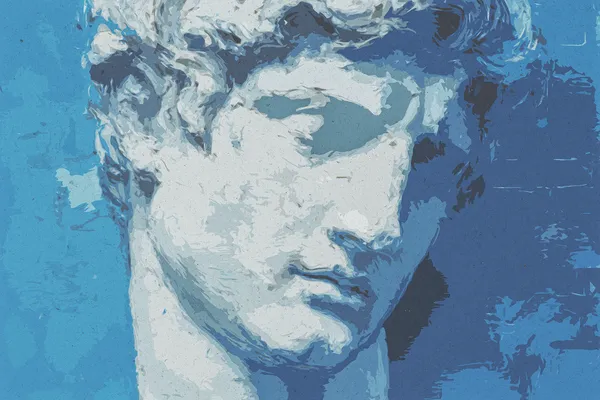
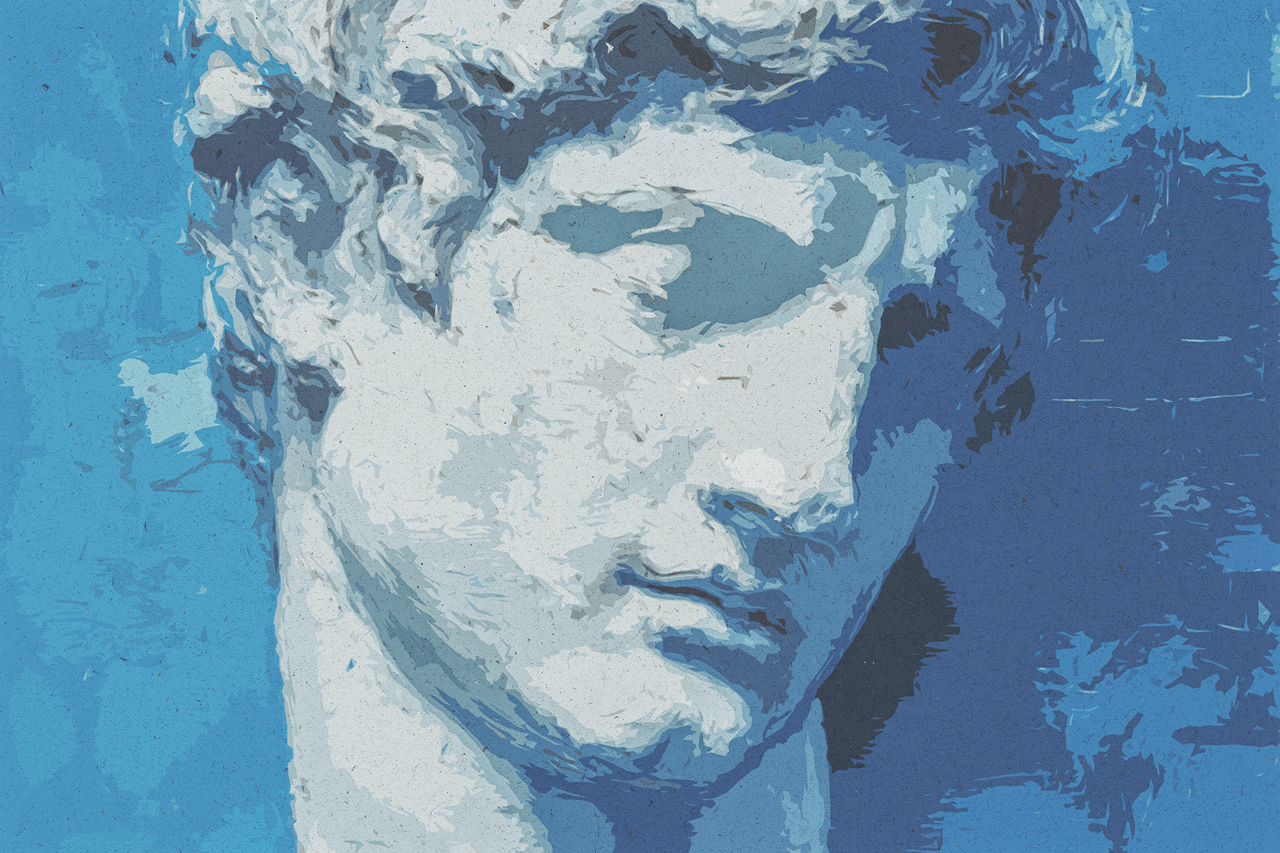
Converts poorly: Photographs (vectorization produces a stylized, posterized result — not photorealistic), highly textured surfaces, images with heavy noise or compression artifacts, very low-resolution source images (under 300px).
Photographic vectorization deserves a specific warning. The AI converts continuous-tone photographs into posterized, illustration-style graphics. This can be an intentional artistic choice. It is not a way to get a vector version of a photograph that looks like the photograph. For that, you keep the photo as a high-resolution raster and place it inside a vector document rather than converting it.
2. Prepare Your Source Image
The quality of vector output depends significantly on what you feed in.
Use the highest resolution source available. Vector conversion simplifies raster information into mathematical paths. More pixel data means more accurate simplification decisions. A 2000x2000px source produces noticeably better vectors than a 500x500px source.
Ensure sharp focus and clean edges. The AI detects edges to generate paths. Blurry edges make edge detection ambiguous. If your source image is slightly blurry, use AI upscaling to enhance sharpness before vectorization.
Provide solid, uniform backgrounds. Gradients, patterns, and textures confuse the AI's color region analysis. For logos and icons, provide images on solid white or transparent backgrounds. If only a photographed version exists, remove the background first.
Increase contrast for low-contrast images. If the subject and background are similar colors, temporarily boost contrast before vectorization. A light gray logo on white may convert poorly because the AI can't distinguish the edge. Correct colors in the vector output afterward.
Reduce noise and compression artifacts. JPEG artifacts create false edges the AI may trace as unintended shapes. PNG sources are preferable because they lack compression artifacts. If your source has visible artifacts, apply light noise reduction before vectorization.
3. Configure AI Vectorization
Upload to Lovart's AI Vector Converter (available on the Free tier with 50 operations per month). Select the appropriate mode: logo/simple graphics (optimized for flat colors and clean shapes), illustration mode (for more detailed artwork with shading), or photo mode (for stylized artistic conversion — rarely appropriate for logos).
Configure critical parameters. Color count — specify the exact number of colors in your logo. For a three-color logo, set the count to three. This prevents the AI from creating unnecessary intermediate shades. Detail level — lower for minimalist logos, higher for detailed emblem logos. Path smoothness — balance smooth curves with shape accuracy. Corner treatment — sharp corners for geometric logos, rounded for organic logos.
4. Generate and Review
The AI produces the vector. Review at multiple zoom levels: 25% for overall appearance, 100% for standard viewing, and 400% for path detail inspection.
Check for accurate color reproduction — AI color quantization sometimes approximates rather than matches exactly. Compare against official hex codes. Check for smooth curves without unnecessary anchor points — too few points produce jagged approximations, too many produce unnecessarily complex files. Check for sharp corners where the logo has sharp corners, no unintended shapes or artifacts from source noise, and correct text rendering (text should be converted to paths rather than embedded as fonts).
5. Refine and Edit
Common refinements: increase color count if the AI merged colors that should remain separate, decrease detail level if the AI created paths for noise, adjust smoothness if curves appear jagged or over-simplified, manually edit in Lovart's vector editor for fine adjustments.
Organize the vector for professional use: separate elements onto logical layers (background, main shape, text, decorative elements), name layers descriptively, group related elements, set up color swatches with proper names.
Correct any typography issues. AI-traced text may have slightly distorted letterforms, inconsistent letter spacing, or lost detail in thin strokes. If you know the font and have licensing, replace AI-traced text with the actual font. Otherwise, manually adjust letter paths for accuracy.
6. Test Scalability
The defining advantage of vectors is infinite scalability. Test your refined vector at multiple scales: favicon size (16x16px) — is the design still recognizable? Billboard equivalent — do curves remain smooth without visible anchor point faceting? Typical usage sizes — does the vector look correct everywhere it will be used?
7. Export for Multiple Applications
SVG for web use — scalable, small file size, editable, styleable with CSS, animatable. AI or EPS for professional print and design workflows. PDF for sharing with clients and printers.
For print, use CMYK color mode. Convert RGB vectors to CMYK and adjust colors — some vibrant screen colors can't be reproduced in print. Outline all fonts to avoid font substitution at the printer. Include bleed area if printing to the edge of the page.
The Honest Tradeoff
AI vectorization has dramatically lowered the barrier to entry, but it's not a replacement for a skilled vector artist. AI produces excellent results for logos with flat colors and clean shapes — the 80% of vectorization needs. For highly complex illustrations with subtle gradients, organic textures, or artistic imperfection, AI output often needs manual cleanup. For simple, flat logos, AI vectorization can match professional manual tracing quality.
The comparison of tools: Lovart's Free tier offers fully AI-powered conversion integrated with design workflow — convert, then immediately use in designs. Inkscape (free, open source) offers unlimited free vectorization with traditional auto-tracing algorithms — more manual control but less sophisticated edge detection. Dedicated websites like Vectorization.org offer quick one-off conversions with lower quality. Photoshop's built-in tools offer highest precision potential but require subscription and skill — 10-30 minutes per image versus seconds with AI.
FAQ
What's the difference between raster and vector?
Raster images (JPEG, PNG) are pixel grids — fixed resolution, degrade when enlarged. Vector graphics (SVG, AI, EPS) are mathematical path descriptions — scale infinitely without quality loss. Raster is for photographs and web display. Vector is for logos, icons, illustrations, and anything that needs to print at multiple sizes.
Can I vectorize a photograph?
You can, but the result will look like a posterized illustration, not a photograph. Vectorization converts continuous tones into flat color regions. This can be an intentional artistic choice but is not a way to get a photorealistic vector version.
What's the best free vector conversion tool?
Lovart's Free tier offers the best combination of AI quality and design workflow integration with 50 operations per month. Inkscape is the best free desktop alternative for unlimited use with manual control. Remove.bg-like dedicated converters offer quick one-offs with lower quality.
Why do my vectorized logos look slightly off?
Common causes: source image was too low resolution, color count was set incorrectly (merging or splitting colors), detail level was too high (creating paths for noise), text wasn't corrected after tracing (AI treats text as shapes, not semantic text). Fix: use higher resolution source, adjust color count, decrease detail level, and manually adjust letter paths or replace with the actual font.
How do I prepare a vector file for print?
Convert to CMYK color mode. Outline all fonts. Include bleed area (typically 0.125 inches). Export as AI, EPS, or PDF. Confirm specifications with your printer. Test with a small print sample before full production.
What file formats should I export?
SVG for web and digital use. AI or EPS for professional design workflows. PDF for sharing with clients and printers. Export all three for maximum compatibility. Lovart provides multi-format export optimized for each use case.
Can vector conversion handle gradients?
It depends on the complexity. Simple two-color gradients can be converted to gradient mesh objects. Complex multi-stop gradients or radial gradients often get posterized into color bands. If gradients are essential, manual vector recreation in specialized software produces better results than automated conversion.
A Closing Observation
Vector conversion is one of those unglamorous tasks that quietly determines whether your brand looks professional or amateur across different media. A logo that looks crisp on your website but pixelated on your trade show banner broadcasts disorganization. The AI tools now available make this a non-issue for anyone willing to spend ten minutes on the conversion process. The files that used to die in your printer's inbox can now be fixed before they ever get there.
Ready to create? Lovart is the AI Design Agent that generates professional designs from plain language descriptions. Visit our AI Design Tools to explore image generation, video creation, background removal, logo design, and more. Or start creating free — 50 designs per month, no credit card required.
Try Lovart's AI Design Tools
Continue exploring AI design and creative workflows. Check out our complete guides on AI image generation, video creation with Veo 3 and Sora 2, building brand kits, and creating professional social media content — all powered by Lovart's AI Design Agent.
Related Clipart: Raster (PNG) vs. Vector (SVG): The Ultimate Guide for Modern | Vector Logo Export Why You Need SVG Files For Signage And Pr